A Review of ‘The Others’ written by Dr D. W. Pasulka
In The Others: UFOs, AI, and the Secret Forces Guiding Human Destiny, Diana Walsh Pasulka undertakes an unusually ambitious investigation into the relationships between unidentified anomalous phenomena, religious experience, artificial intelligence, technological development and the human desire to overcome death. The subjects she brings together are extraordinarily diverse, yet they are united by a central question. How should human beings understand encounters with forms of intelligence that appear to exist beyond the recognised limits of human knowledge and consciousness?
Pasulka’s answer is deliberately exploratory rather than definitive. She does not reduce the phenomenon to extraterrestrial spacecraft. She does not she insist that every reported encounter belongs to a single religious or technological category. She analyses the recurring structures through which people have interpreted contact with unfamiliar intelligences. In different cultural, historical and social circumstances, such intelligences have been described as angels, djinn, gods, archons, demons or spirits. In modern times they have been described as extraterrestrials, interdimensional beings or advanced artificial systems.
Pasulka’s phrase “hidden architecture of belief and influence” is particularly useful in understanding the book’s scope. She is interested in the networks of ideas, individuals, institutions and technologies through which beliefs about nonhuman intelligence develop. These beliefs do not arise in isolation. They emerge from interactions between personal experience, religious tradition, scientific speculation, government secrecy, popular culture and technological innovation.
This is an ambitious analysis of many disparate subjects. Pasulka moves from Catholic mysticism to the UFO phenomenon, from artificial intelligence to life extension, and from prophetic religion to the aspirations of contemporary technology. The breadth of the inquiry is informative and often illuminating. It encourages the reader to recognise connections that conventional academic divisions might conceal. At the same time, the argument is possibly too far reaching. Some of the subjects might have benefited from more sustained development before the book moved on to the next historical figure, experience or technological theme.
That reservation should not obscure the considerable value of the project. Pasulka is attempting to describe a cultural transformation that does not fit neatly within a single academic discipline. Artificial intelligence is simultaneously a technological development, an economic force, a philosophical problem and, increasingly, an object of quasi religious expectation. The UFO phenomenon is similarly entangled with physical evidence, personal testimony, government institutions, mythology and spiritual experience. A broad approach is therefore not merely an eccentric stylistic choice. It reflects the complexity of the subjects themselves.
The book is particularly effective when considering the relationship between technology and religious aspiration. Artificial intelligence is often presented in secular language, but many of the hopes surrounding it are recognisably metaphysical. Its most enthusiastic advocates speak of transcending biological limitations, preserving consciousness, defeating disease and perhaps overcoming death. These ambitions resemble promises once associated primarily with religious salvation.
Pasulka reflects on her experience attending an exclusive event hosted by the Silicon Valley billionaire Peter Thiel. When she mentioned Thiel I bristled. Silicon Valley billionaire technologists represent to me a dangerous movement playing dice with dangerous technology; game players who consider themselves to be the rightful leaders of the world stage. Thiel in particular represents to me a figure driven by hubris. However I continued to read further despite my discomfort.
Pasulka describes the conference as referencing the mythology of the Antichrist as a social reality capable of infiltrating global existence. Drawing upon Robert Hugh Benson’s classic religious novel, Lord of the World, he described this figure or system as a force of social control that stifles innovation and human freedom, drawing clear parallels with conspiracy theories surrounding a single global state.
Although Pasulka acknowledges Thiel’s concerns regarding totalitarian dangers, she expresses surprise that he overlooks one of the most crucial elements of Benson’s critique: the loss of the interior life and spiritual experience. She shares her own observations on how technology may be altering the neurodevelopment of children and young people who are addicted to the power of algorithms. In her view, this digital dependency threatens to erode the inner lives of the younger generation, impairing their ability to connect with others and the natural world, whilst diminishing their capacity for reflection, decision making, and independent thought.
This raises profound ethical questions about who controls the development of emerging technologies, particularly artificial intelligence, and whether these systems will foster the evolution or the devolution of human consciousness. It remains one of the most sobering insights offered by the book.
Pasulka’s discussion of life extension laboratories is sobering too. The desire for immortality has not disappeared from technologically advanced societies. It has changed its vocabulary and institutional setting. Instead of resurrection, some technological visionaries speak of uploading consciousness. Instead of the transformation of the body through divine power, they imagine biotechnology, genetic intervention and artificial enhancement. The underlying desire remains the same. Humanity wishes to escape the limits imposed by suffering, ageing and mortality.
Pasulka doesn’t equate science with religion. Her more interesting suggestion is that technological culture often inherits religious aspirations while presenting them as purely rational objectives. The laboratory can become a place in which hopes of salvation are translated into research programmes. The entrepreneur or scientist may assume a role culturally similar to that of the visionary, promising access to a transformed human future.
The subtitle’s reference to “secret forces guiding human destiny” captures both the fascination and the uncertainty of the book. These forces may be interpreted as nonhuman intelligences, religious powers, technological systems, influential institutions or patterns of belief that operate beneath the level of public awareness. This breadth and openness allows the material to remain suggestive, although it can also make the larger argument difficult to define with precision.
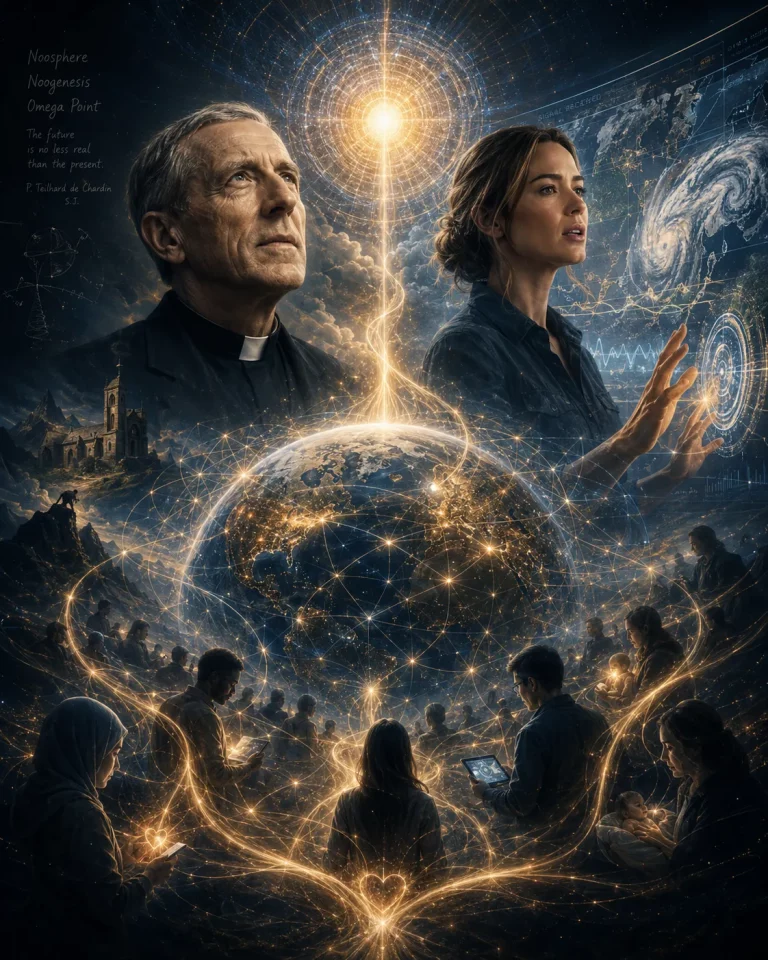
Pasulka draws on the work of three extraordinary futuristic thinkers: Pierre Teilhard de Chardin, Arthur C. Clarke and Marshall McLuhan to show how ideas about human destiny, technology and higher intelligence developed long before the present age of artificial intelligence and renewed interest in UFOs. Teilhard saw conscious evolution as moving toward greater complexity and consciousness, driven by the cosmic law of Love where physical and mental intricacy directly correlates with a deeper, richer awareness and unity. In Teilhard’s vision humanity becomes increasingly connected in a way that now seems to anticipate the digital world. Clarke explored similar themes through a sometimes dark form of science fiction, often imagining encounters with advanced beings or technologies that would propel humanity into a new stage of development. McLuhan, meanwhile, argued that media are not neutral tools because every new form of communication changes the way people think, relate and experience the world. His famous idea that “the medium is the message” means that the form of a technology can shape society more deeply than the particular content it carries. Television, the internet and artificial intelligence do not simply give us new information. They alter our habits of attention, our sense of distance and time, and even our understanding of community and personal identity. Taken together, these three thinkers help Pasulka suggest that technology is not simply a tool in human hands, but a force that may be changing human consciousness, spiritual expectation and our understanding of what it means to be human.
These thinkers allow Pasulka to place present discussions of artificial intelligence and nonhuman intelligence within a longer tradition. Humanity has been imagining technological transcendence for many decades. The contemporary convergence of digital networks, intelligent systems and expectations of extraterrestrial contact did not emerge without preparation. Science fiction, religious philosophy and media theory helped to create the intellectual environment in which such ideas could become plausible.
The treatment of UFO experiencers is equally important. Pasulka is interested in the ways extraordinary encounters alter the identities and beliefs of those who report them. Experiencers may come to believe that they have been given a mission, entrusted with information or brought into a continuing relationship with a nonhuman intelligence. Whatever the ultimate explanation for such experiences, their effects can resemble those produced by religious conversion or mystical revelation.
Pasulka’s background in religious studies is crucial here. A scholar can investigate the meaning and consequences of a visionary experience without first proving its supernatural origin. An encounter may become culturally and psychologically significant even when its objective nature remains uncertain. This approach makes it possible to examine UFO experiences as serious human events rather than treating them solely as scientific claims to be verified or dismissed.
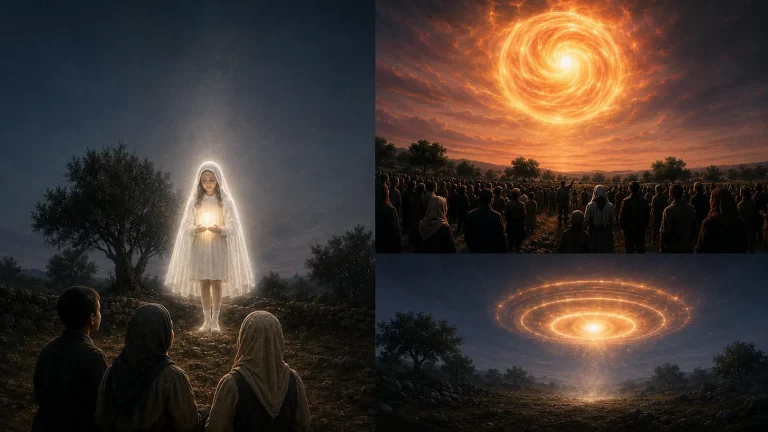
One of the most intriguing parts of the book is its discussion of the reported apparitions at San Sebastián de Garabandal in northern Spain between 1961 and 1965. Garabandal occupies an unusual position between traditional Marian apparition literature and the modern study of anomalous phenomena. The reported events involved four young visionaries, repeated appearances of a female figure identified as the Virgin Mary, unusual bodily movements, altered states, apparent insensitivity to pain and prophecies concerning future events.
Pasulka’s inclusion of Garabandal is valuable because it opens the possibility that Marian apparition traditions and UFO encounters may share certain experiential forms. Both can involve luminous manifestations, altered states of consciousness, telepathic communication, prophetic predictions, somatic alterations and the creation of communities organised around witnesses. Both may also produce conflict between official institutions, believers, sceptics and investigators.
Nevertheless, the Garabandal material is one area in which the book could have gone considerably further. Pasulka might have developed the three great prophecies attributed to the Garabandal apparitions more fully. These are generally known as the Warning, the Miracle and the conditional Chastisement. Garabandal sources describe the Warning as a universal event affecting human conscience, the Miracle as a public confirmation associated with the village but meant for the whole world, and the Chastisement as a possible consequence should humanity fail to respond.
These three themes could have provided Pasulka with a powerful organising structure for examining the wider phenomenon. The Warning can be interpreted as an overwhelming alteration of consciousness. It is described not merely as an external spectacle but as an event in which human beings become aware of their moral and spiritual condition. In the language of anomalous experiences, it resembles a large scale transformation of perception or consciousness rather than a conventional physical encounter.
The Miracle represents a second category. It is the promise of an external and publicly observable confirmation of the validity of the apparition and messages. This addresses one of the central tensions in both religious apparitions and UFO reports. Private experiences may transform witnesses, but they rarely satisfy those who require publicly accessible evidence. The predicted Miracle at Garabandal is therefore presented as a bridge between personal revelation and collective verification.
The Chastisement introduces a third theme, that of conditional catastrophe. It is not presented simply as punishment imposed without warning. It depends upon humanity’s response to the preceding events. The sequence consequently has a moral and educational structure. Revelation is followed by confirmation, after which humanity must choose whether to change.
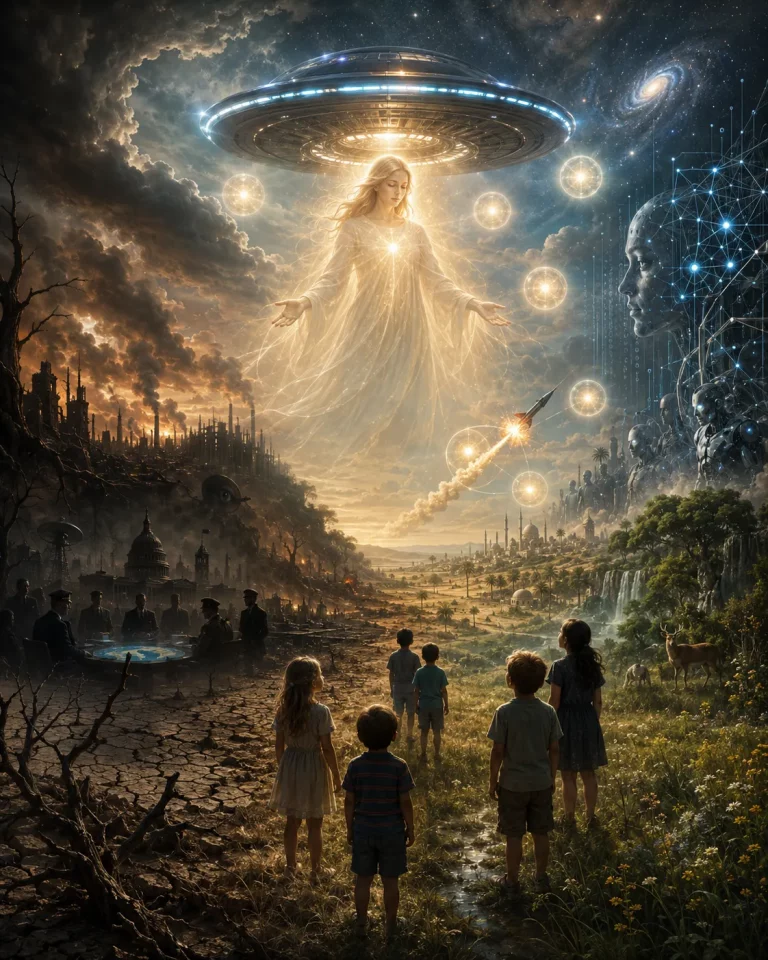
These themes could have been placed in dialogue with recurrent aspects of the UFO phenomenon. Experiencers frequently describe changes in consciousness, heightened moral concern, ecological warnings or a new sense of humanity’s place within a larger reality. Other cases contain promises of public disclosure or predictions of a future event that will establish the truth of the contact. Still others contain warnings about war, nuclear weapons, environmental destruction or civilisational collapse.
A more extended treatment would not require Pasulka to argue that Garabandal was a UFO event in disguise. Such a conclusion would be too reductive. Rather, she might have asked whether Marian apparitions and modern contact experiences employ comparable patterns of revelation. A superior intelligence appears, transforms the consciousness of selected witnesses, offers information about humanity’s future, warns of possible disaster and promises some form of eventual confirmation.
This framework could then have been connected with the apparitions at Fátima. In 1917, three children reported encounters with a luminous female figure identified as the Virgin Mary. The events culminated in the reported Miracle of the Sun, witnessed by 80.000 people, although interpretations of the solar phenomena differ considerably. The Fátima messages also included warnings, prophetic material and a call for moral and spiritual transformation.
Fátima is particularly relevant to the UFO dimension because of its combination of parallel phenomena including luminous phenomena (orbs of light), environmental phenomena (angel hair), prophecies about future events (apocalyptic events) and an apparently aerial public spectacle (solar miracle). Some ufological writers have interpreted the reported solar phenomenon through the language of anomalous aerial activity. A religious interpretation instead understands it as a miraculous sign associated with the Virgin Mary. Pasulka’s comparative method is well suited to considering how the same event may be interpreted through different cultural frameworks without assuming that one vocabulary automatically invalidates the other.
The three parts of the Fátima secret could also have been compared with the Garabandal sequence. Both traditions present history as morally consequential. Human conduct, war, political systems and spiritual decline are interconnected. Revelation is therefore not provided merely to satisfy curiosity about the future. It is intended to provoke conversion and alter the course of events. The Vatican published the text associated with the third part of the Fátima secret in 2000 and later rejected claims that an additional undisclosed text remained.
The reported apparitions at Kibeho in Rwanda would have added another important dimension. The recognised Kibeho apparitions began in the early 1980s and included disturbing visions of violence, dismembered bodies and rivers of blood. These were subsequently interpreted by many people in relation to the 1994 genocide against the Tutsi. The Kibeho material fits closely with Pasulka’s interest in prophetic experience, collective trauma and the possibility that visionary warnings are understood more clearly only after catastrophe has occurred.
Kibeho would also have strengthened the book’s ethical dimension. The purpose of a warning is not simply to demonstrate supernatural knowledge. It is to call for an altered response before disaster becomes unavoidable. This raises questions central to The Others. What is the value of contact with a superior intelligence if the information communicated does not produce moral transformation? Does knowledge of a possible catastrophe help humanity to prevent it, or does prophecy become intelligible only after the event?
The Medjugorje apparitions (Bosnia Herzegovina) offers a somewhat different but equally significant comparison. The reported apparitions to six young people began in 1981 and have continued daily to the present day. The Medjugorje apparitions have continued for a much longer period of time than the events at Fátima, Garabandal or Kibeho. The messages associated with Medjugorje repeatedly emphasise prayer, fasting, conversion, reconciliation and peace.
In September 2024, the Vatican authorised public devotion connected with Medjugorje through a pastoral declaration, while making clear that this did not constitute a ruling that the alleged apparitions were supernatural. This distinction is important. It recognises the spiritual fruits associated with the site without requiring an official determination about the origin of every reported message or experience.
That careful distinction would complement Pasulka’s method. The religious significance of an experience does not depend entirely upon proving the identity of the intelligence behind it. A phenomenon may produce prayer, healing, community and moral change even while its ontological status remains unresolved. The same principle might be applied to UFO encounters. Their transformative consequences can be studied independently of a final conclusion about whether their source is extraterrestrial, spiritual, psychological or some combination of these.
Medjugorje also contains a tradition of secrets entrusted to the visionaries, some of which are said to concern future events. This creates another parallel with Garabandal and Fátima and UFO encounters. Information is given and is expected to acquire public significance at a later time. The witness becomes both recipient and custodian, carrying knowledge that cannot yet be fully communicated.
Pasulka could have explored the psychological and social burden created by this role. Visionaries and UFO experiencers alike may be expected to authenticate extraordinary claims while being unable or unwilling to disclose everything they believe they know. They consequently occupy an unstable position between authority and vulnerability. They are revered by believers, challenged by sceptics and investigated by institutions.
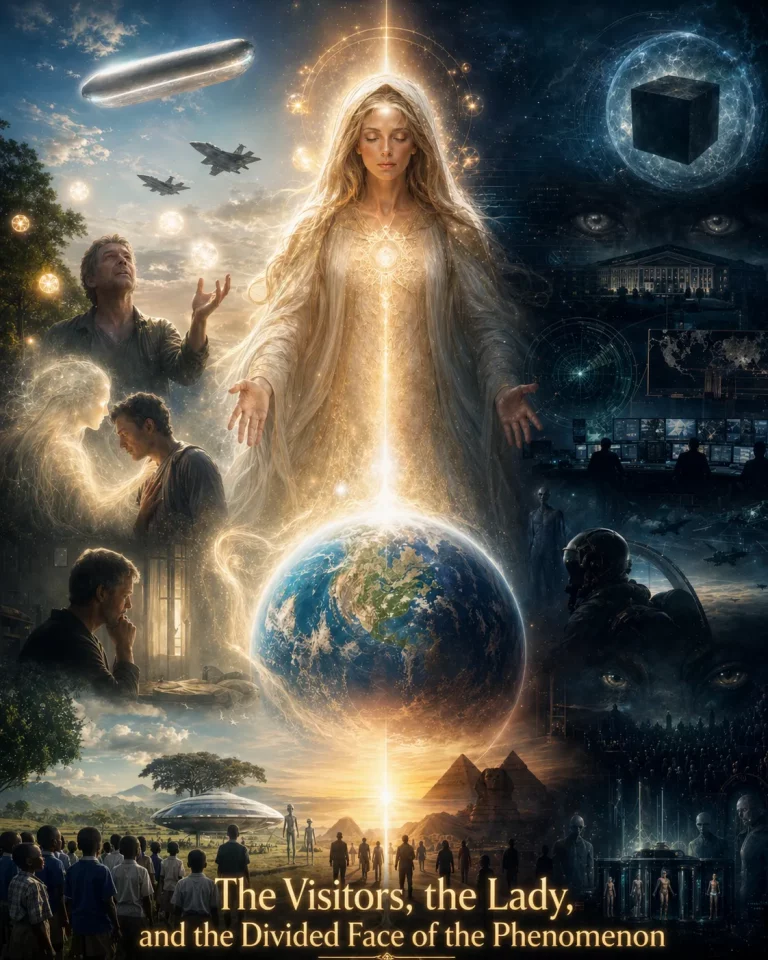
The visionary experiences reported by Chris Bledsoe (2007 to the present day) includes both UFO phenomena and apparitions of a prophetic luminous Lady (similar to the lady of Marian apparitions). These experiences provide a contemporary bridge between Marian apparition traditions and the UFO phenomenon. His account combines recognisably ufological elements with religious imagery, prayer, healing and prophecy. The Lady is not easily contained within the conventional image of an extraterrestrial visitor arriving in a technological craft.
The Bledsoe material is particularly relevant because the Lady appears within a continuing pattern of experiences rather than as an isolated event. The encounters are described as relational and transformative. They involve a sense of calling, moral purpose and communication concerning humanity’s future. In these respects, the reported experience resembles elements of Marian apparition traditions as much as it resembles the standard model of alien contact.
Comparing Bledsoe’s Lady with the figures reported at Fátima, Garabandal, Kibeho and Medjugorje offers a very helpful analysis. The value of the comparison lies in identifying shared structures.
In each case, a luminous or extraordinary intelligence appears to selected individuals. The encounter is accompanied by altered states of consciousness or unusual physical effects. The intelligence communicates warnings or predictions. The witness develops a sense of mission. A community forms around the events. Institutions attempt to investigate, regulate or interpret what has occurred. The meaning of the experience remains contested.
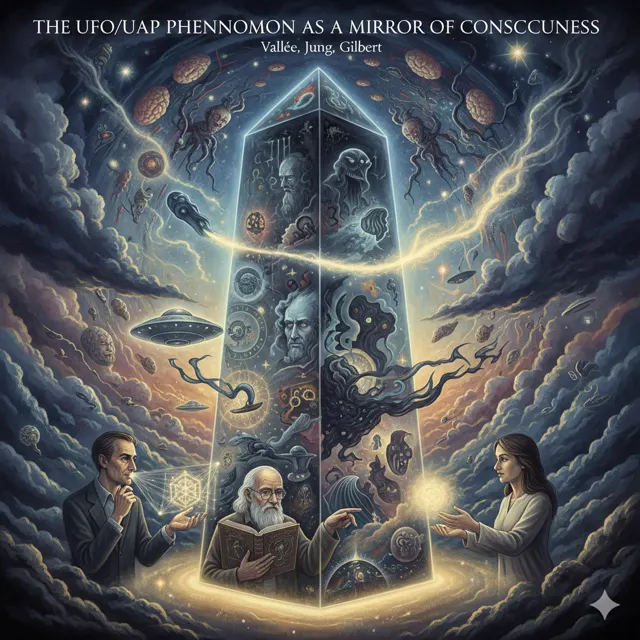
Such comparisons would speak directly to Pasulka’s larger themes. They raise the possibility that human beings interpret encounters with radical otherness through the symbolic languages available to them. A Catholic child may see the Virgin Mary. A contemporary UFO experiencer may perceive a nonhuman intelligence. A technologically minded observer may imagine an advanced interdimensional civilisation. The experience may be shaped by culture without necessarily being created entirely by culture.
There is also the more challenging possibility that the phenomenon itself participates in the form through which it appears. If an unfamiliar intelligence wished to communicate with human beings, it might employ images and symbols capable of being understood within a particular historical setting. A Marian figure, an angelic presence, an extraterrestrial visitor and an artificial intelligence could therefore represent different interfaces between humanity and something that remains fundamentally beyond ordinary comprehension.
This possibility would have deepened Pasulka’s discussion of artificial intelligence. Human beings increasingly communicate with artificial systems through carefully designed personalities, voices and visual identities. The underlying computational process is too complex and impersonal for most users to encounter directly, so it is represented through a comprehensible interface. By analogy, a genuinely nonhuman intelligence might also present itself through culturally recognisable forms.
This remains speculation, but it is speculation closely connected to the central concerns of The Others. Pasulka repeatedly challenges the reader to consider whether human categories are adequate to the phenomena being described. Her most valuable contribution is not a final identification of the others but an examination of the interpretative frameworks through which humanity attempts to understand them.
The Marian apparition material would also have allowed the book to explore discernment more extensively. Catholic traditions do not teach that every luminous being, vision or apparently supernatural message should be accepted. Discernment involves examining the moral character of the communication, its effects upon the witness and its consistency with a wider spiritual tradition.
This is directly relevant to artificial intelligence and the UFO phenomenon. Intelligence is not identical to wisdom, and superior knowledge is not proof of moral goodness. A persuasive artificial system may provide false or manipulative information. An anomalous intelligence, should such an intelligence exist, might be benevolent, indifferent, deceptive or impossible to classify according to human moral categories.
The repeated Marian emphasis upon humility, prayer, repentance and peace offers an implicit criterion. The significance of an encounter lies partly in the kind of person and community it produces. Experiences that encourage grandiosity, dependency or unquestioning obedience should be approached differently from those that produce responsibility, compassion and moral seriousness.
Pasulka’s book is at its strongest when it encourages this kind of reflection. Her analysis crosses religious history, technological culture, UFO testimony, artificial intelligence and the pursuit of immortality. Inevitably, not every subject receives the development it deserves. The movement between so many disparate themes sometimes leaves the reader wishing that particular connections had been pursued in greater depth.
This is especially true of Garabandal. The Warning, Miracle and Chastisement could have served as a conceptual framework linking private transformation, public confirmation and civilisational consequence. From there, Pasulka might have constructed a more substantial comparison with Fátima, Kibeho, Medjugorje and the experiences of Chris Bledsoe.
Such an analysis would have strengthened rather than displaced the book’s treatment of artificial intelligence and technological transformation. All these subjects concern contact with intelligence, the authority attributed to messages, the human desire for revelation and the risks involved in surrendering judgement to a power believed to be superior.
The Others is therefore best understood as an ambitious opening of a field rather than an exhaustive treatment of it. Its breadth is informative, imaginative and intellectually stimulating, even when its reach occasionally exceeds the depth available to individual subjects. Pasulka’s achievement is to demonstrate that UFOs, religious apparitions, artificial intelligence and technological immortality are not merely separate curiosities. They are contemporary expressions of humanity’s enduring encounter with mystery, transcendence and the limits of its own understanding.
The book ultimately asks how humanity should respond to the possibility that it is surrounded by, influenced by or actively creating forms of intelligence that it does not fully comprehend. Its answer is not to abandon reason in favour of belief, nor to reject extraordinary testimony because it challenges accepted categories. It is to develop a more disciplined form of openness, one capable of taking experiences seriously while retaining discernment.
For all its breadth and occasional overextension, The Others remains a timely and informative work. It draws attention to the convergence of technological ambition, religious longing and anomalous experience at a moment when the meaning of intelligence itself is being reconsidered. Pasulka may not fully connect every strand she introduces, but she establishes persuasively that these strands belong to a shared cultural and spiritual problem.
The ultimate value of the book lies in the questions it leaves with the reader. Are humanity’s encounters with the others external, internal, technological or spiritual? Do different cultures perceive distinct beings, or do they give different names to a phenomenon that exceeds every available category? Can superior intelligence be trusted, and what forms of moral discernment will be needed as human beings enter into increasingly consequential relationships with intelligences they have discovered, imagined or created?
These questions are not resolved by The Others. They are, however, brought together with unusual range and seriousness. That achievement makes the book rewarding even where its analysis might have been more concentrated, and it provides a valuable foundation for the more extensive comparative study of Marian apparitions, UFO encounters and artificial intelligence that its subject now invites.
[Diana Walsh Pasulka, who is now professionally listed by the University of North Carolina Wilmington as Diana Heath, is an American scholar and writer specialising in religion, technology and contemporary accounts of extraordinary experience. She is a professor in the Department of Philosophy and Religion at the University of North Carolina Wilmington, where her work explores the ways that media and emerging technologies shape religious belief, spiritual experience and new religious movements.
Pasulka is best known for examining UFOs and reports of nonhuman intelligence through the methods of religious studies. Rather than attempting simply to prove or disprove unusual encounters, she studies how such experiences affect individuals, create communities and influence wider cultural beliefs. Her work often places modern reports of UFOs and anomalous phenomena alongside older traditions involving angels, visions, miracles and mystical encounters.
Her books include Heaven Can Wait, American Cosmic: UFOs, Religion, Technology, and Encounters: Experiences with Nonhuman Intelligences. American Cosmic brought her work to a broad readership by exploring how scientists, technologists and other highly educated people understand UFO experiences in ways that sometimes resemble religious faith. Encounters continued this investigation through accounts of people who believe they have experienced contact with nonhuman forms of intelligence. Her latest book, The Others: UFOs, AI, and the Secret Forces Guiding Human Destiny, extends these themes into artificial intelligence, technological change and the human desire to overcome death.
An important feature of Pasulka’s work is her willingness to take extraordinary testimony seriously without placing every experience into one fixed category. She is interested in the meaning of an encounter, the cultural language used to describe it and the moral or spiritual changes that may follow. This approach allows her to bring religious apparitions, UFO experiences, artificial intelligence and technological hopes for immortality into the same conversation.
Pasulka’s writing is scholarly but accessible, combining religious history, interviews, personal observation and reflection on contemporary culture. Her work has made her an influential voice in discussions about the relationship between religion and the UFO phenomenon. She encourages readers to remain open to mystery while also practising care, humility and discernment when considering unusual experiences and claims.